
Maia 300: Microsoft wants to drive more AI in each megawath
Microsoft unveils Maia 300, a chip designed to make cloud AI more efficient, but its gains are still based on internal numbers.
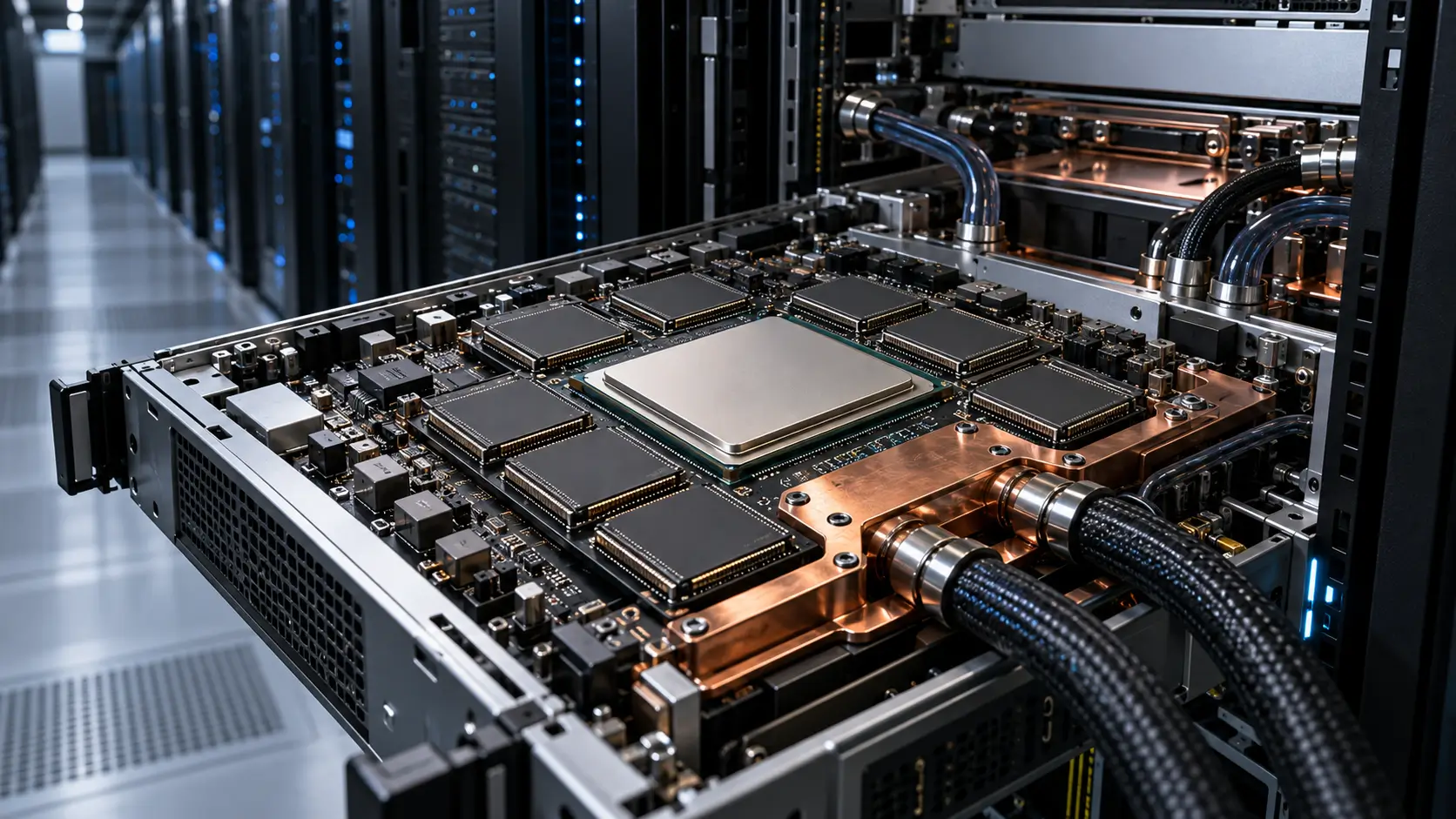
Microsoft unveiled on October 12 a new backstage chip for its artificial intelligence services. Named Maya 300, it must begin equipping its data centres in 2027 and gradually become Copilot's main inference system, GitHub Copilot and other home services.
The goal is not only to go faster. Microsoft wants to reduce the cost and electricity needed to produce each response from AI, while reducing its dependence on Nvidia and d的AMD accelerators.
A chip designed to answer rather than learn
Maia 300 is optimized for theinference, i.e. the step where a previously trained model answers a question, writes code or executes the steps of an agent. It focuses on long context windows, time-sensitive conversations and tasks that require several successive actions.
Microsoft claims to have jointly designed the chip, software, network, cooling and built to limit costly data movements. Maia 300, however, remains a system announced for 2027, not one that today responds to users.
288GB of fast memory around block architecture
The new chip abandons Maia 200's monolithic design for several chiplets architecture. The calculation blocks use the TSMC N2P process, while memory and input-outputs are placed on separate components, optimized for their function.
Each accelerator has eight HBM4 memory batteries totalling 288 GB, with a maximum announced bandwidth of 18TB/s. Its thermal envelope reaches 950 W. According to Microsoft's technical analysis (https://azure.microsoft.com/en-us/blog/deep-dive-into-azure-maia-300-architecture/), memory bandwidth is 2.5 times higher than Maia 200 and capacity increases by 33%.
This memory keeps the model parameters and context close to the calculation units. Maia 300 also accepts low-precision formats, including MXFP4, to reduce the amount of data to move.
A server frame that consumes 167 kW
A Maia 300 frame combines 96 accelerators and consumes up to 167 kW. It offers 27.6TB of HBM memory and a cumulative bandwidth of 1.7Po/s. More than 80% of its heat load can be removed by liquid cooling.
Microsoft claims that a complete configuration produces up to seven times more chips than a Maia 200 built and about 40% more chips per megawatt than competing graphic processors. These are statements of Microsoft**. The company does not name the compared systems and does not publish the protocol to reproduce the result.
Reuters points out that a Maia 300 building consumes more than one Nvidia GB300 building cited in comparison, i.e., about 167 kW compared to 142 kW. The relevant question is therefore not gross consumption, but the amount of useful work obtained per megawatt — a measure that must be verified independently.
Why this chip can change Microsoft services
Microsoft plans to deploy several gigawatts from 2027. The Verge reports that Maia must become the main infrastructure of the company.
Controlling your own chip can reduce costs, finer adapt hardware to models and limit reliance on an external supplier. This does not mean that Microsoft will immediately abandon graphics processors: Azure must continue to support several architectures and customers still need Nvidia or AMD hardware for certain loads.
For the general public, the effects would be indirect: more capacity could improve Copilot's availability or response time. However, there is no guarantee that savings will be passed on to customers in the form of lower rates.
Prices, availability and Canada
Maia 300 is not a component for personal computers and Microsoft has not communicated any prices**. Nor has the company announced any Azure virtual machine allowing customers to rent this chip directly.
Production deployments will begin in 2027. Microsoft did not specify the order of the Azure regions or availability in its Canadian data centres. Therefore, it should not be assumed that Canadian customers will be able to choose Maia 300 from the start.
Limits or Considerations
There is still no independent test of Maia 300. Performance comparisons come from Microsoft and use terms such as "up to" or "expected", without a clearly named model, workload or competitor.
Multi-Gigawatt deployment remains a major energy issue, although each response becomes more effective.
Finally, Microsoft did not detail the price for customers, the final volume, the manufacturing rate of return or the Canadian calendar.
Conclusion
Maia 300 shows that the artificial intelligence competition moves to the design of chips and data centers. Its chiplet architecture, 288 GB of HBM4 memory and large-scale network are concrete advances on paper.
The real test will start in 2027. Microsoft will have to demonstrate that its megawatt gains are in real, large-scale costs and that they are actually improving the cost or quality of services offered to users.