Meta Muse Glimmer: artificial intelligence advanced directly on your computer
Discover Muse Glimmer, Meta's IA designed to work locally on a personal computer equipped with a single graphics card.
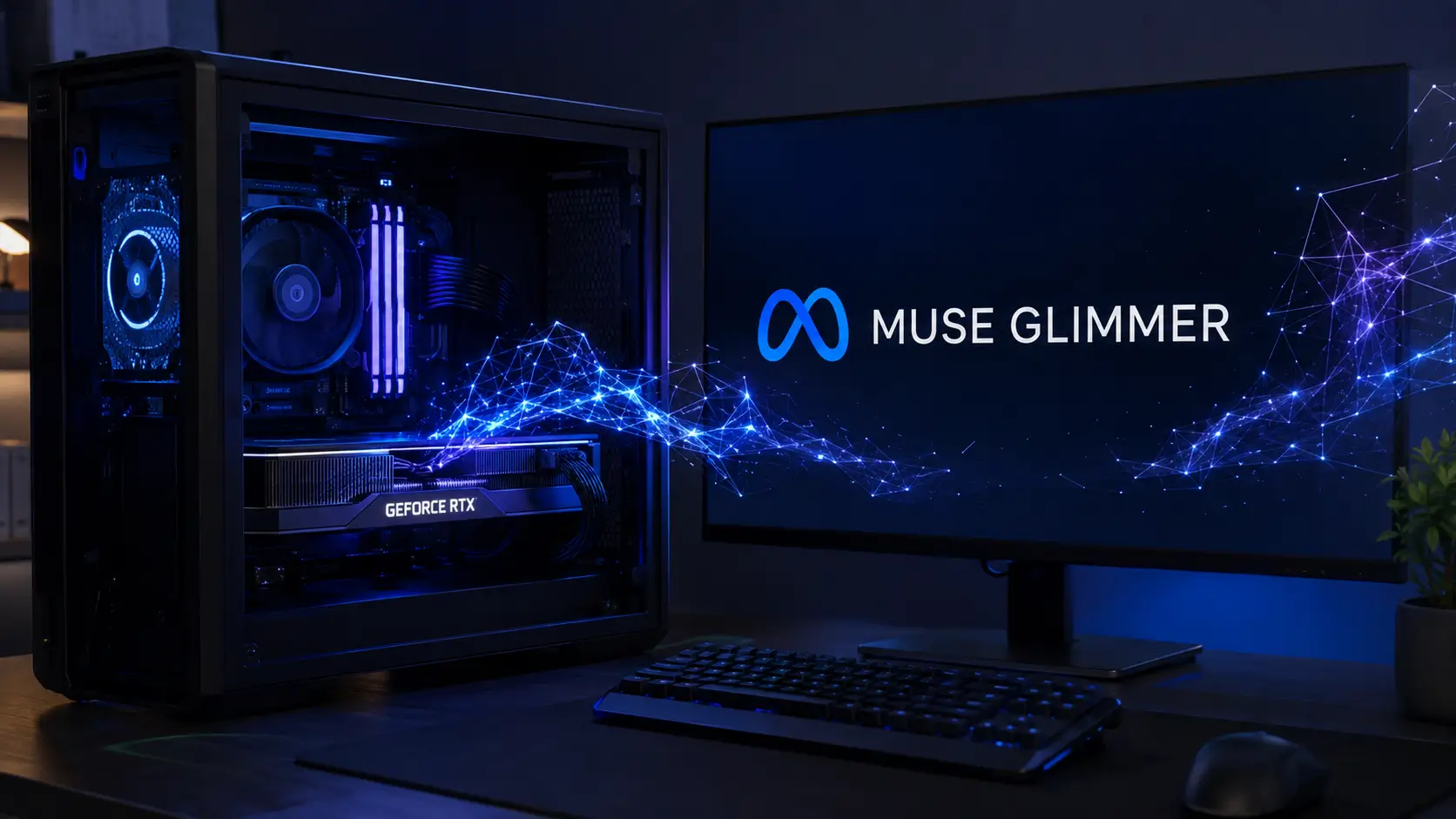
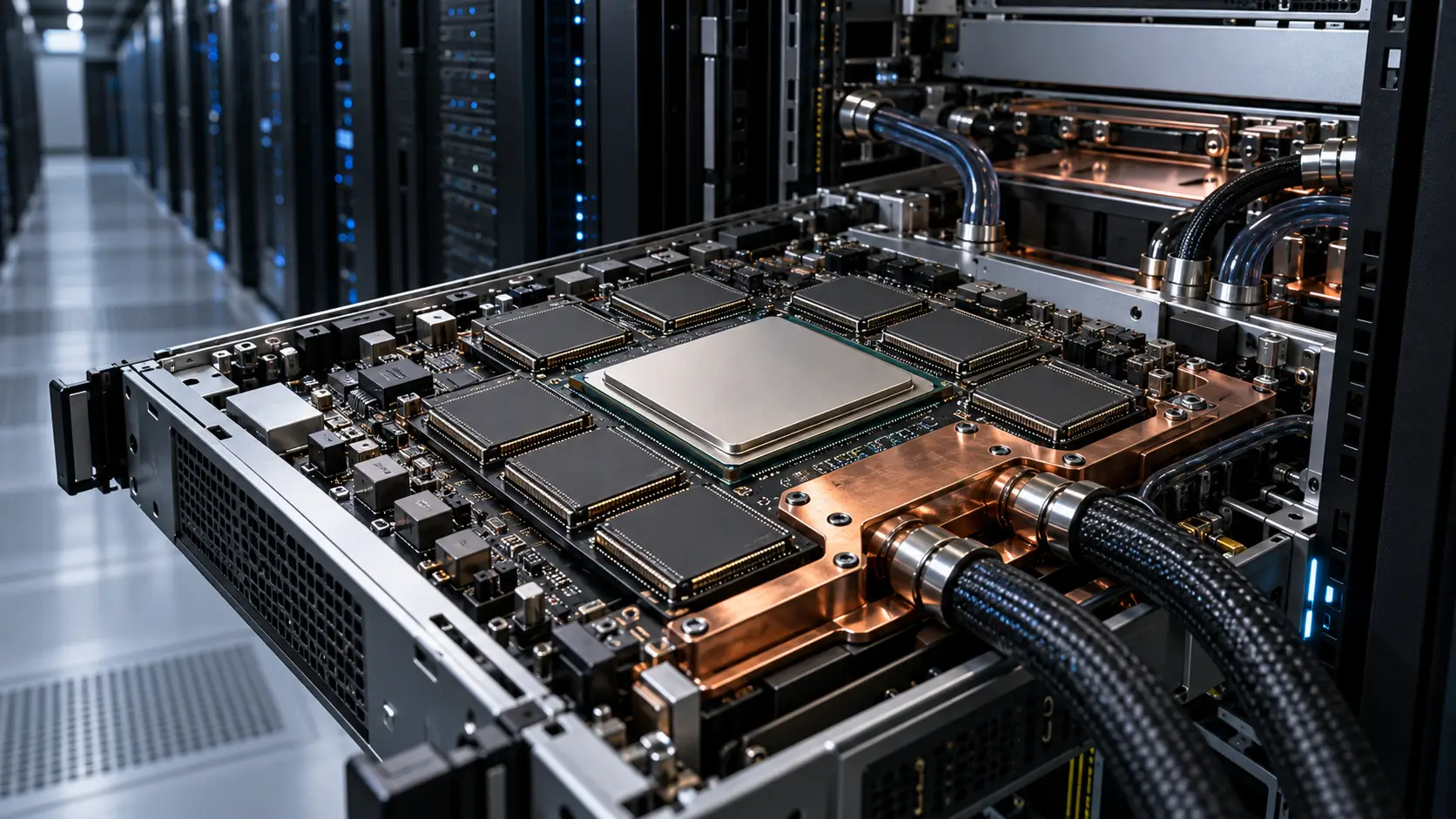
For a long time, the use of efficient artificial intelligence required a connection to data centres equipped with hundreds or even thousands of specialized processors. Meta now wants to bring this computing power closer to the users with Muse Glimmer, a new model of d的IA designed to operate locally on a personal computer with a single compatible graphics card.
This announcement could be an important step towards more accessible, cost-effective and user-controlled artificial intelligence.
What is Muse Glimmer?
Muse Glimmer is an open weight artificial intelligence model developed by Meta. Unlike the most impressive models on the market, it has not been designed to operate exclusively in huge data centers.
Its more compact size allows it to perform certain tasks directly on a sufficiently powerful Mac or PC, without having to transmit every request to an artificial intelligence service hosted in the cloud.
Muse Glimmer specifically targets so-called agentic tasks, i.e. operations in which the AI does not simply answer a question. It can analyze a request, establish a series of steps and use the tools at its disposal to perform a more complex task.
This could include:
- analyse and classify documents;
- summarize large files;
- assist a developer in code writing;
- automate certain administrative tasks;
- search local files;
- to provide a company-specific private assistant;
- run different processes without constantly depending on an external service.
Muse Glimmer remains smaller than the most powerful d Its objective is not necessarily to replace them in all situations, but rather to provide sufficient capacity to effectively perform many common tasks.
A model obtained by distillation
To design Muse Glimmer, Meta used a technique called distillation.
This method consists of using a much more powerful model as a teacher to train a smaller model. The compact model learns to reproduce some of the capacities, reasonings and behaviours of the main model, but with considerably reduced material needs.
In the case of Muse Glimmer, the teacher model is Muse Spark, Meta's more advanced system. Glimmer can thus regain some of its capabilities while being much lighter and easier to run locally.
This approach could be compared to the creation of a specialized version of a huge software: it does not necessarily contain all the possibilities of the original system, but retains the most useful functions in a much more efficient format.
Easy installation on a personal computer
One of the elements that distinguish Muse Glimmer is its announced ability to operate with one graphics card.
The large d的IA models usually require several professional GPUs, a considerable amount of memory and a complex infrastructure. Muse Glimmer is instead targeting high-performance personal computers and workstations already used by developers, creators or small businesses.
Its deployment should follow a similar approach to other open-weight local models:
- download the template files;
- install a compatible running engine;
- select the available graphics card;
- load the model in the application;
- forward requests via a local interface or private API.
However, it should not be concluded that Muse Glimmer will work properly on any computer. The exact amount of RAM, video memory and storage space required will depend on the version used, its quantification and the software chosen to run it.
At the time of the announcement, Meta had not yet detailed all the recommended hardware configurations. A recent graphics card and sufficient memory will likely remain necessary to enjoy a fluid experience.
Why is local execution interesting?
Operating artificial intelligence directly on your computer provides several advantages.
Better data control
Where the processing is entirely local, the documents analysed do not necessarily have to be forwarded to an external supplier. This can be an important benefit for companies that handle confidential information, technical data or internal documents.
However, a local installation does not automatically guarantee confidentiality. It also depends on the running software, the extensions used, the logs kept and the external connections allowed.
Reduced user costs
Commercial AIA services generally charge for the use of their models according to the volume of data processed. With a local model, the user pays mainly for its equipment and electricity consumed.
For an organization that regularly performs repetitive tasks, this approach could become more cost-effective than continuous API billing.
Further customization
Since Muse Glimmer is presented as an open-weight model, developers will be able to adapt it to specific needs, subject to Meta's final license.
A company could, for example, build an assistant specialized in its products, technical documentation or internal procedures.
However, it is important to distinguish open weights and fully open software. The publication of weights makes it possible to run and sometimes adapt the model, but it does not necessarily mean that training data, complete code and all design methods will be made public.
A new direction for artificial intelligence
Muse Glimmer is not just trying to become another conversational assistant. Its interest lies mainly in the possibility of bringing the AI agentic closer to the user and his own material.
This could lead to the emergence of private assistants capable of working with local files, automating software and performing professional tasks without having to send data continuously to a remote computer centre.
The true value of Muse Glimmer will obviously depend on its actual performance, license, compatibility with existing tools and final hardware requirements. Meta's claims will therefore have to face independent tests.
However, one thing seems certain: the future of artificial intelligence will not only be played in the huge data centres. Part of this intelligence is gradually being installed on our own computers.
Sources
- [Reuters — Meta launches Muse Glimmer and continues its shift towards open-weight models] (https://www.reuters.com/world/china/meta-launches-new-ai-model-zuckerberg-champions-open-weight-push-2026-08-10/)
- Reuters — Meta launches Muse Code, powered by Muse Spark 1.2