Google Pixel Tag: the Android tag that wants to find your objects more accurately
The Google Pixel Tag combines UWB, Bluetooth 6.0 and Find Hub to find key, wallet and luggage accurately in Canada from November.
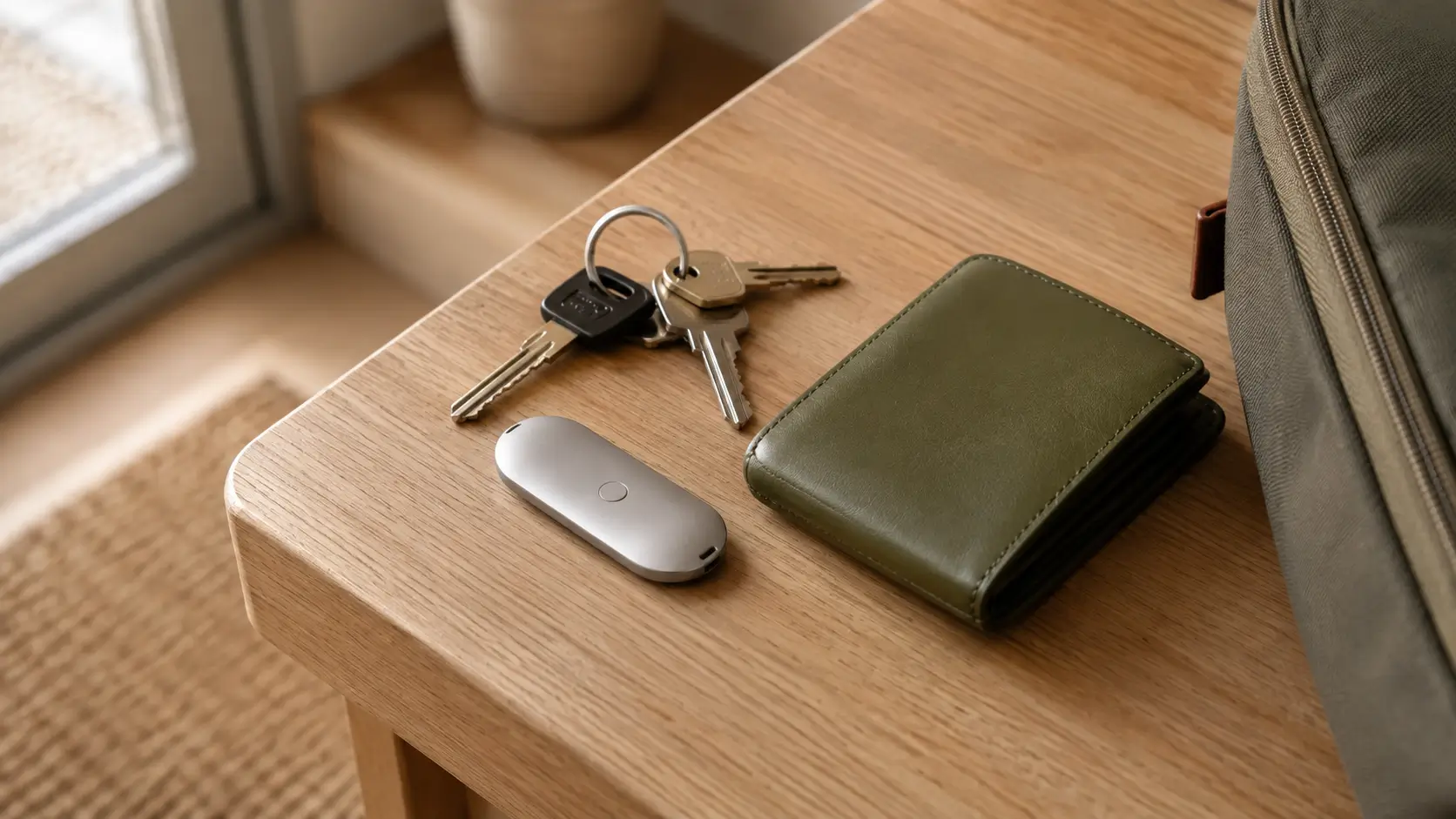
Google officially enters the localization beacon market with the Pixel Tag, a small device for keys, wallets, luggage and other objects easy to mislead.
Announced on August 12, 2026, the Pixel Tag integrates into the Find Hub network of Android. Its commercialization is scheduled for November 11, including in Canada. However, the product has not yet been tested independently.
Official presentation by Google Canada
A tag connected to the vast Android network
The Pixel Tag can be paired quickly with a device running Android 9 or later. Simply remove the tab from the stack and approach the phone tag to launch Fast Pair.
When an object is nearby, the user can ring the tag in the Find Hub application. The Pixel Tag button also works in the opposite direction: a pressure allows the associated phone to ring even if it is in silent mode.
If the object is further away, its position can be detected by the Find Hub collaborative network. According to Google, it relies on more than one billion Android devices worldwide.
[Pixel Tag Canadian Page](https://store.google.com/ca/product/pixel tag)
Two technologies to improve accuracy
The Pixel Tag brings together the ultra-large band, or UWB, and the Channel Sounding function of Bluetooth 6.0.
On a compatible device, the UWB can indicate the distance and direction of the beacon. Channel Sounding can measure distance more accurately by analyzing the Bluetooth signal, but does not necessarily provide direction.
These advanced functions, however, depend on the telephone equipment. Depending on the information available at the launch, a Pixel 10 or later is required to enjoy Channel Sounding. For directional location by UWB, a Pixel Pro model is required from the Pixel 6 Pro. The basic Pixel 11 does not have a UWB chip.
It will also be possible to ring the beacon from some Pixel watches, a browser or Pixel Buds by asking Gemini for the operation.
A product designed for everyday life
The oblong case is made of stainless steel and weighs about 12 grams. Its IP67 index gives it dust protection and temporary immersion in the laboratory, but Google specifies that it is not completely waterproof and that this resistance can decrease with wear.
The tag uses a replaceable CR2032 button battery. Google announces an autonomy of up to one year, depending on use and environmental conditions. However, this estimate is derived from testing with pre-production hardware and software.
A beacon can be shared with up to ten people. This function could be convenient for a family suitcase, a common kit or equipment used by several colleagues.
Confidentiality and protection against unwanted tracking
Find Hub network location data is encrypted from end to end, according to Google. The position of the device is not stored directly on the network.
Android must also automatically notify a person when an unknown tag seems to move with it. The device can then provide the necessary instructions to ring the tag and find it.
These measures are important, but their actual effectiveness with the Pixel Tag will need to be evaluated after its marketing.
Prices and availability in Canada
Google Canada announces a price of C$39.99 for a tag, with a planned sale on November 11, 2026. A package of four will also be proposed, but its Canadian price was not clearly stated in the official press release at the time of writing.
Prices may vary depending on retailers, promotions, packages and region.
Limits or Considerations
The Pixel Tag is not yet available and the first independent evaluations are yet to come. The speed of the Find Hub network, the accuracy in the real situation and the autonomy must therefore be checked.
The most accurate location also requires recent equipment. An Android 9 phone can pair the tag and use its general functions, without necessarily supporting the UWB or Bluetooth 6.0 Channel Sounding.
Finally, the case does not have an integrated hook or ring. An accessory may therefore be required to install on a keyring.
Conclusion
The Pixel Tag does not reinvent the localization tag, but it gives Google a consistent solution for its huge Android ecosystem.
The association of UWB, Bluetooth 6.0 and Find Hub could make it a serious competitor to the AirTag and Moto Tag. However, it will be necessary to wait until November and the first independent tests before determining whether accuracy and reliability really meet the promises.