Pixel Watch 5: Google wants to turn the connected watch into a health guard
The Pixel Watch 5 combines IA, advanced health monitoring and respiratory emergency detection in a new connected watch.
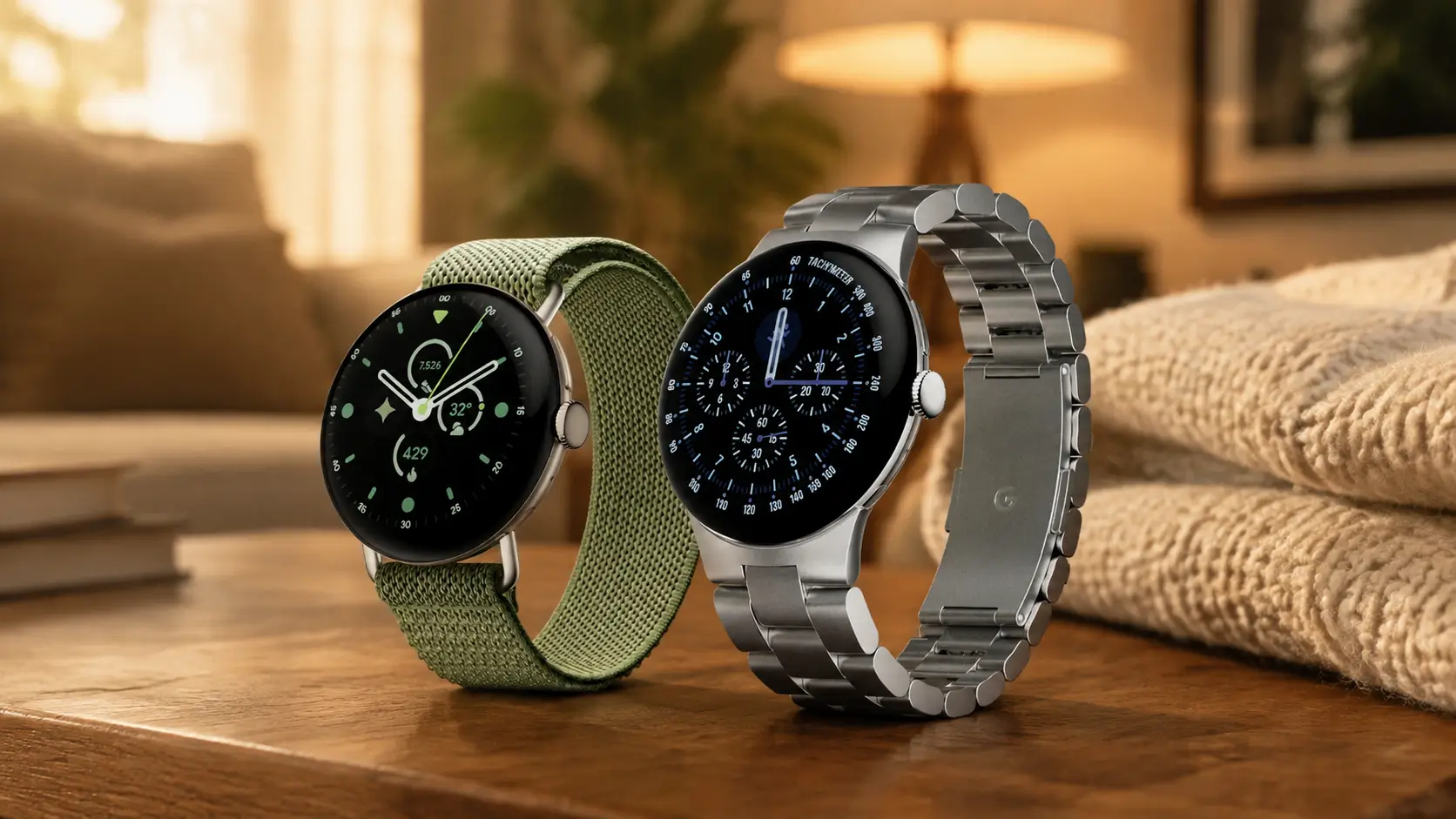
Google officially unveiled the Pixel Watch 5 on August 12, 2026. At first glance, this new generation retains the circular appearance characteristic of Pixel watches. The real evolution, however, is inside: Google now relies on artificial intelligence to detect subtle physiological changes and, in certain circumstances, to recognize an emergency even before its owner can ask for help.
The Pixel Watch 5 marks a new step for connected objects. These are no longer only used to count steps, display notifications or measure heart rate. They are gradually becoming preventive surveillance systems capable of analyzing our condition continuously.
Health Guardian: discreet body surveillance
The great novelty put forward by Google is Health Guardian, a suite of functions powered by artificial intelligence models specialized in the interpretation of physiological data.
Rather than providing only one-off measurements, the system observes some indicators for several weeks to identify unusual changes. In particular, it may produce monthly analyses on:
- blood pressure trends;
- variations associated with insulin resistance;
- the quality of breathing during sleep;
- certain respiratory emergencies.
Google claims that its models were trained from billions of minutes of data from voluntary users, then compared to clinical reference methods. The aim, however, is not to replace a physician or medical device, but to report some changes early enough that might warrant more serious verification. Google Health Guardian
In particular, it should be understood that the watch does not measure blood pressure directly as would a brewer. Instead, over a prolonged period, it analyses pulse and motion signals to identify a persistent cardiovascular trend.
The same applies to insulin resistance: the watch does not measure blood sugar and cannot diagnose diabetes. It attempts to identify metabolic variations that may induce the user to consult a professional or perform appropriate examinations.
A watch capable of calling 911
The most remarkable function is certainly the respiratory emergency detection.
Using its optical sensor, accelerometer, barometer and algorithm executed directly on the device, the watch monitors serious and persistent decreases in oxygen levels. Such a situation could occur during choking, severe pneumonia or accidental poisoning.
When the watch thinks it's an emergency, it triggers a powerful vibration and displays a full-screen warning. If its owner does not react, an alarm will sound and a 30 seconds countdown will begin. In the absence of a response, a connected telephone or LTE version of the watch can automatically call emergency services, transmit the person's position and notify designated contacts.
Google states, however, that this technology cannot detect all respiratory emergencies. Nor is it intended to make a diagnosis. Its effectiveness depends in particular on the proper wear of the watch, its level of load and the availability of a connection to make the call. (https://blog.google/products-and-platforms/devices/pixel/pixel-watch-breathing-emergency-detection/)
This function is first deployed in some European countries and is not yet available in Canada. It is also available on Pixel Watch 4 in eligible territories, indicating that a significant part of innovation is based on algorithms rather than on new exclusive sensors.
Gemini moves more to the wrist
The Pixel Watch 5 integrates deeper Gemini Intelligence. It becomes possible to raise the wrist to start a workout, set a timer or find a reservation contained in Gmail.
Some simple operations can be processed directly on the watch, even without an Internet connection. Gemini can also analyse the context and propose action at the appropriate time. Flight information may, for example, appear on the approach to the airport, while a question received by message may trigger the automatic search for an event in the calendar.
A pinching gesture made with the fingers then allows to confirm certain actions without touching the screen.
A GPS corrected by Google Maps 3D models
Google also claims to have doubled the accuracy of GPS tracking in difficult environments.
In city centres, satellite signals frequently bounce over buildings, which can artificially shift the route of a race or hike. The Pixel Watch 5 combines satellite data with the three-dimensional models of Google Maps to estimate the actual signal trajectory and correct certain errors.
According to Google, the system was tested over thousands of kilometres. However, independent testing will be required to confirm its performance against specialised sports watches. Development of the new GPS
More modest material improvements
The watch is available in 41 mm and 45 mm formats. It has an AMOLED display of up to 3,000 nits, as well as a Snapdragon W5 Gen 2 processor with more RAM.
Google announces an overall performance improvement of about 20%. The estimated range is about 30 hours for the small model and 40 hours for the large, depending on the conditions of use.
In Canada, depending on the format and presence of an LTE connection, the Pixel Watch 5 is expected to be sold in a range of approximately $550 to $720. These amounts can naturally vary depending on retailers, promotions and cellular packages.
An important but still incomplete development
The Pixel Watch 5 does not revolutionize the watch connected by its appearance or autonomy. Rather, its interest lies in the growing ability of artificial intelligence to interpret the signals produced by the human body.
This development is promising, but it also requires caution. Several functions of Health Guardian will arrive gradually, their availability will depend on the country and their results will always have to be seen as general indications.
The Pixel Watch 5 clearly illustrates the direction the industry is taking: tomorrow, a watch will not be enough to inform us. It could also recognise that a situation becomes dangerous and intervene when we are no longer able to do so ourselves. Official presentation of Pixel Watch 5